
For any business operating in the Golden State, staying compliant with California environmental laws is a fundamental part of running a responsible and successful operation. Achieving and maintaining compliance involves a proactive approach that includes understanding the specific regulations that apply to your industry, implementing internal management systems, and knowing when to seek professional guidance.
California’s regulations are known for being thorough, but with a clear strategy, your business can meet its obligations and minimize risk.
Key Takeaways about How to Ensure Your Business Stays Compliant with California Environmental Laws
- A business can identify its specific regulatory obligations by assessing its operations, materials, and location.
- Implementing an Environmental Management System (EMS) provides a structured framework for managing environmental responsibilities.
- Regular self-audits and comprehensive employee training are vital components of a continuous compliance strategy.
- Meticulous record-keeping and proper documentation are crucial for demonstrating compliance to regulatory agencies.
- Certain state laws, like the Porter-Cologne Act, create specific water quality obligations for California businesses.
- Obtaining professional legal counsel can help a company address complex compliance issues and respond to agency inquiries.
Understanding the Landscape of California Environmental Laws
 California has a complex web of environmental rules enforced by various state and local agencies. The umbrella organization is the California Environmental Protection Agency (CalEPA), which oversees departments like the State Water Resources Control Board and the Department of Toxic Substances Control (DTSC). These agencies enforce both federal laws, such as the Clean Water Act, and powerful state-specific statutes.
The rules that apply to your business depend entirely on what you do and where you are located. A manufacturing facility near the Port of Los Angeles will have different air and water discharge permits than a tech company in San Jose or a dry cleaning business in a San Diego suburb. The first step is always to identify which specific set of local, state, and federal regulations govern your operations.
Foundational Steps for Environmental Compliance in California
Building a strong compliance program starts with a few core actions. These steps help create a framework that makes managing your environmental responsibilities more systematic and less of a constant challenge. By integrating these practices into your regular business operations, you can address potential issues before they become serious problems.
Here are some foundational steps for any California business:
- Conduct a Compliance Audit: A thorough self-assessment or third-party audit can identify all your business’s environmental touchpoints. This includes reviewing your use of chemicals, management of waste, water discharge, and air emissions to see which regulations apply.
- Develop an Environmental Management System (EMS): An EMS is a formal plan that outlines your company’s policies, procedures, and responsibilities for environmental compliance. It’s a roadmap that helps everyone in the organization understand their role.
- Implement Comprehensive Training: Your employees are your first line of defense. Proper training ensures that the people handling materials, operating equipment, and managing waste understand the correct procedures and the importance of following them.
- Maintain Meticulous Records: Documentation is key. Keep detailed records of permits, employee training sessions, waste disposal manifests, and any required environmental testing or monitoring.
These actions form the bedrock of a compliance program that not only meets legal requirements but also promotes a culture of environmental stewardship within your company.
Key Areas of Focus for California Businesses
While every business is unique, several key areas of environmental law affect a wide range of industries across California. Paying close attention to these common areas of regulatory focus can significantly reduce your company’s risk of violations and penalties. From protecting the water quality of San Diego Bay to managing hazardous materials, these responsibilities are central to operating in the state.
Your compliance plan should prioritize the following areas:
- Water Quality and Discharges: Under state laws like the Porter-Cologne Water Quality Control Act, businesses must control what they release into groundwater and surface waters. This includes managing stormwater runoff from your property and obtaining the correct permits for any industrial wastewater.
- Hazardous Waste Management: If your business generates or handles hazardous materials—from industrial solvents to chemicals used in dry cleaning—you must follow strict rules for their storage, transportation, and disposal.
- Soil and Groundwater Protection: Property owners and businesses have a responsibility to prevent chemical spills and leaks that could contaminate soil and groundwater. If contamination has occurred in the past, there are specific legal processes for investigation and cleanup.
- Air Quality Control: Local air districts in regions like the Bay Area and Southern California have their own strict rules regarding emissions from equipment, manufacturing processes, and vehicles.
Addressing these critical areas with clear policies and procedures is essential for maintaining a good standing with regulatory agencies and the community.
Responding to Inquiries and Violations
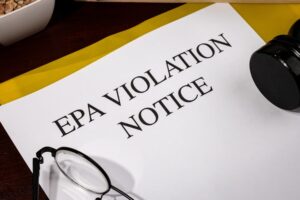 Even with the best compliance program, your business may receive an inquiry or a Notice of Violation from a regulatory agency. When this happens, your response is critical. The goal is to address the agency’s concerns cooperatively while protecting your company’s legal rights.
Acting quickly and strategically is important. This often involves gathering all relevant documentation related to the alleged violation, understanding the specific regulations cited by the agency, and opening a line of communication.
In these situations, seeking counsel from a law firm with experience in environmental law can provide clarity on your obligations and help you formulate a response that is both compliant and strategic, potentially resolving the matter through negotiation or mediation rather than formal enforcement action.
California Environmental Laws FAQs
Here are answers to some common questions that California business owners have about environmental regulations.
What happens if my business receives a Notice of Violation?
A Notice of Violation (NOV) is a formal notification from a regulatory agency that it believes your business has broken an environmental law. It is not a fine, but it typically requires a prompt response and a plan to correct the issue. It’s advisable to review the NOV carefully with legal counsel to understand its implications and determine the best course of action.
How do state and federal environmental laws interact in California?
Federal laws like the Clean Water Act and the Resource Conservation and Recovery Act (RCRA) set a baseline for environmental protection. However, California often has its own, more stringent laws and standards. Businesses in California must comply with both, and in most cases, the state law will be the primary regulation they need to follow.
Are small businesses exempt from any of California’s environmental laws?
Generally, no. While some regulations have different requirements based on the size of the business or the quantity of materials it generates, virtually all businesses are subject to environmental laws. Small businesses are still responsible for proper waste disposal, water protection, and other fundamental compliance areas.
What is an environmental indemnity agreement in a real estate transaction?
In a commercial property sale, an environmental indemnity agreement is a contract where one party agrees to cover the costs of any environmental contamination found on the property. This is a tool used to allocate liability for potential cleanup costs between the buyer and seller.
How can I prepare for an inspection from a regulatory agency?
The best preparation is having a strong, ongoing compliance program. This includes having organized and accessible records, well-maintained equipment, and properly trained staff. If an inspector arrives, have a designated person to accompany them, answer questions factually, and document the inspection process.
A Proactive Approach to Environmental Compliance
Managing your company’s obligations under California’s complex environmental laws requires diligence and a forward-thinking mindset. By building a robust compliance program and addressing issues proactively, you can protect your business from fines, litigation, and operational disruptions.
If your business needs guidance with environmental compliance, is facing an enforcement action, or requires representation in litigation, the attorneys at Tropea McMillan, LLP are here to help. We provide counsel to corporations, property owners, and municipalities across San Diego, Los Angeles, San Jose, and all of California. Contact our office at (866) 977-8921 or through our online form to discuss how we can assist you with your environmental law needs.